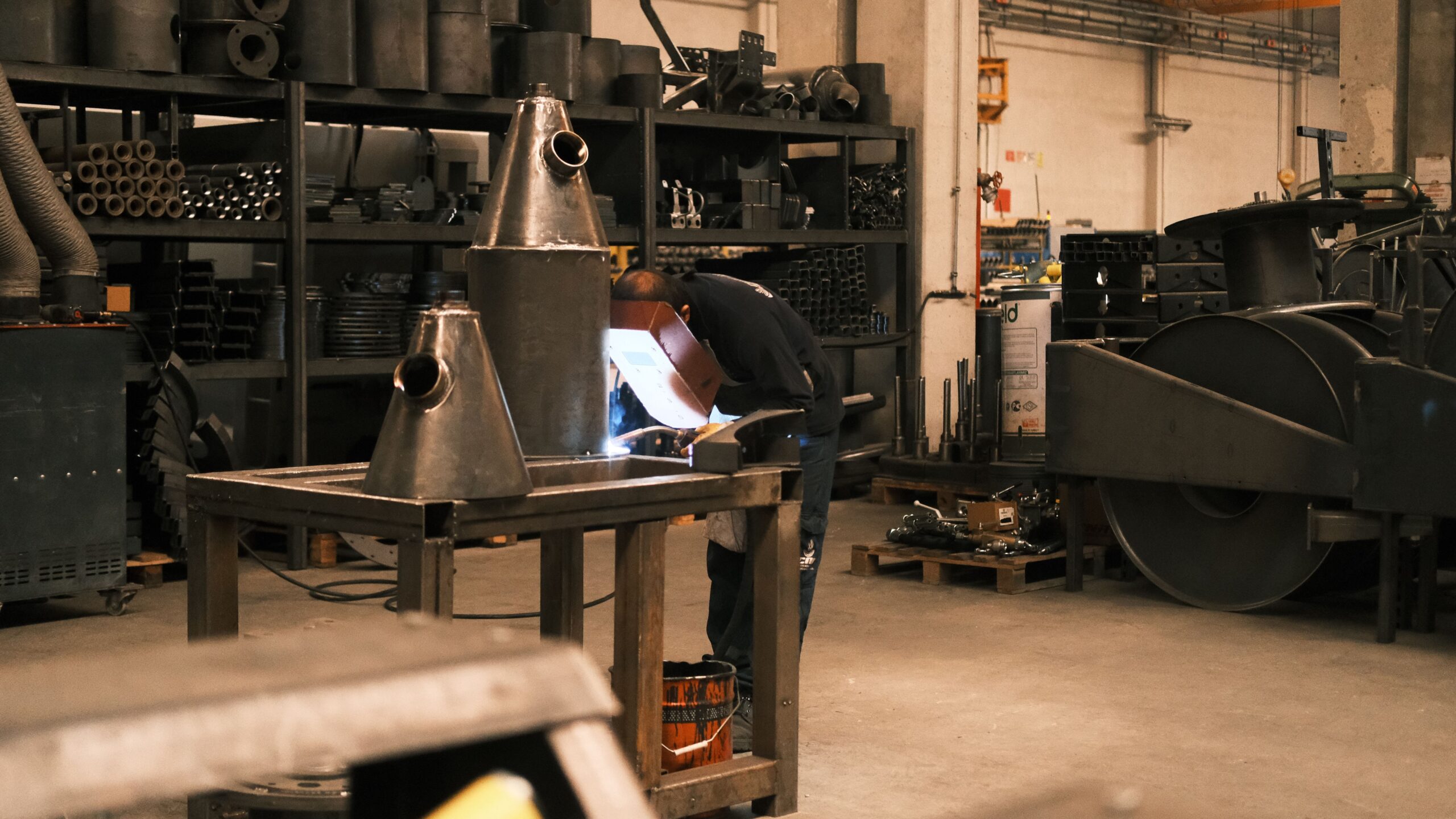
Completing fabrication and installation is not the same as completing a project. Between the last weld being made and a facility producing its first qualified batch, operating its first power cycle, or running its first semiconductor process, there is a defined sequence of verification, testing, and documentation activities that must be executed correctly before operations can begin. Fabrication commissioning support services are the technical and field services that bridge the gap between construction completion and operational readiness, and they represent one of the highest-value contributions a fabricator can make to a project that extends beyond the shop.
For owners and EPCs, the commissioning phase is where the quality of the preceding fabrication and installation work either pays off or creates problems. Piping systems that were fabricated and installed correctly commission smoothly. Systems with undocumented modifications, incomplete welds, improper support, or inadequate cleaning require troubleshooting and rework during commissioning, compressing the window between construction completion and the owner’s revenue start date. A fabrication partner who stays engaged through commissioning reduces that risk and accelerates the path to operational readiness.
What Fabrication Commissioning Support Actually Involves
Fabrication commissioning support services span a range of technical activities that draw directly on the fabricator’s knowledge of what was built, how it was built, and where the system boundaries and connection points are.
System walkdowns and punch list support. Before pressure testing and functional verification can begin, the installed system must be walked against the as-built drawings to confirm that every component is in place, every connection is made, and the system is configured correctly for the test to follow. Fabricators who built the system have an inherent advantage in this walkdown because they know the design intent, know where field modifications were made, and can quickly identify missing or incorrect elements that a commissioning team unfamiliar with the system might spend hours tracing.
Pressure testing support. Hydrostatic and pneumatic testing of piping systems requires that test boundaries be correctly established, temporary blinds and isolation devices be installed at the right locations, the system be properly vented and drained before and after the test, and the test be conducted and documented in accordance with the applicable code. Field crews who fabricated the system are the natural resource for this work because they understand the system configuration and can set up test boundaries accurately without extensive re-learning time.
Flushing and cleaning. High-purity piping systems, process lines, and steam systems require flushing, chemical cleaning, or air blowing to remove construction debris, mill scale, and residual contamination before service fluids are introduced. The procedures for flushing and verification are system-specific, and the field team that installed the system is best positioned to execute them correctly and to identify any areas where flow patterns or dead legs may require special attention.
System restoration and tie-in support. After pressure testing and cleaning are complete, temporary devices must be removed and the system must be restored to its operating configuration. Final tie-ins to existing systems, equipment nozzle connections, and instrument connections that were left open during testing must be completed and documented. These activities require careful coordination with the facility’s operations team and must be executed with the same quality controls as the original installation.
Punch list resolution. Commissioning invariably generates a list of items that require correction before the system can be accepted. These may include weld repairs identified during testing, dimensional corrections to resolve misalignments at equipment connections, support adjustments, or documentation corrections. The fabricator’s field team is the right resource to execute these corrections quickly and with the documentation continuity the quality record requires.
Our post on Hydrostatic Testing for Industrial Pipe Systems covers the procedures, pressures, and documentation requirements for pressure testing, which is one of the core activities that fabrication commissioning support services facilitate.
Why Commissioning Support Belongs With the Fabricator
The most compelling argument for engaging the fabricator in commissioning support is continuity. A commissioning team brought in cold must learn the system from drawings and documents. A fabricator’s field team already knows it from having built it.
That institutional knowledge matters in practical ways. When a pressure test reveals a pressure drop that may indicate a leak, the field supervisor who oversaw the installation knows which connections were made last, which joints were hardest to access, and where field modifications were made that may not be fully reflected in the current drawing set. That knowledge can reduce leak investigation time from hours to minutes.
When a high-purity system fails its particle count verification after flushing, the team that installed the system knows which sections were most exposed during construction, where end caps were removed and reinstalled, and whether any components were swapped out during the installation that may require re-verification. That context is not available to a commissioning team that was not present during installation.
For regulated industries including pharmaceutical manufacturing, semiconductor fabrication, and nuclear power, the documentation continuity that a single contractor provides across fabrication, installation, and commissioning is also valuable from a quality assurance standpoint. The commissioning records produced by the fabricator’s team can reference the fabrication records directly, creating a coherent quality package rather than a set of documents from multiple organizations that must be reconciled at turnover.
The American Society of Mechanical Engineers (ASME), through its B31.3 Process Piping Code and its Quality Management System requirements for code-stamped work, establishes that fabrication, installation, and testing activities on regulated piping systems must be documented under a consistent quality program. Maintaining that program continuity through commissioning is most straightforward when the same contractor is responsible for all three phases. More information on ASME code requirements is available at asme.org.
Commissioning Support Across Ansgar Industrial’s Core Markets
The specific activities that constitute fabrication commissioning support vary by market and by the regulatory framework that governs the system being commissioned.
Semiconductor and pharmaceutical facilities have the most demanding commissioning requirements. High-purity piping systems must pass particle count verification, resistivity or conductivity testing, and in pharmaceutical applications, formal IQ (Installation Qualification) documentation before they can be used in production. Specialty gas distribution systems require helium leak testing and gas purity verification. Chemical distribution systems require leak testing, containment verification, and secondary containment checks. Ansgar Industrial’s field teams are trained on the specific commissioning requirements for these systems and can execute them within the facility’s contamination control protocols.
Our post on Commissioning High Purity Piping Systems covers the verification sequence for high-purity piping in semiconductor and pharmaceutical applications, including the testing and sampling steps that confirm the system meets its purity specification before service fluids are introduced.
Industrial manufacturing facilities typically require pressure testing of process and utility piping, flushing of cooling water and steam systems, and documentation of installed-as-built conditions for the facility’s maintenance program. Commissioning in operating facilities often requires work to be sequenced around production schedules and involves hot tap and tie-in activities that carry additional safety and operational risk, which the fabricator’s field team is best positioned to manage because they know the system boundaries.
Power and energy facilities require pressure testing to ASME B31.1 or B31.3 requirements, PWHT completion verification before testing, and in many cases third-party inspection witness of the testing process. The documentation package for power piping commissioning is extensive and must be complete before the authorized inspection agency will approve the system for service.
Our post on Plant Expansions: Fabrication and Construction covers how fabrication and field installation work in active facilities is coordinated around the host facility’s operational requirements, which is the context in which commissioning support most frequently requires close owner collaboration.
Documentation Requirements for Commissioning Turnover
The commissioning phase produces documentation that becomes part of the permanent quality record and the facility’s operating asset documentation. A complete commissioning documentation package typically includes test packages with pressure calculations, test logs, and inspector sign-offs; flushing and cleaning verification records; punch list items and their disposition; as-built drawing updates reflecting any field changes made during commissioning; and final system acceptance records signed by the authorized inspector and the owner’s representative.
For regulated industries, the commissioning documentation package must be organized, complete, and indexed before it is submitted for owner review. Gaps in the documentation record delay owner acceptance and can require physical re-verification of work that was already completed but not properly documented.
The Occupational Safety and Health Administration (OSHA) establishes requirements for energy control and hazardous energy management during commissioning activities, including pressure testing and system startup in industrial facilities. Commissioning activities on live systems or near energized equipment require specific lockout and tagout controls and must be planned and executed under a documented energy control program. More information on OSHA’s energy control requirements applicable to commissioning activities is available at osha.gov.
Our post on Documentation and Traceability in Pharmaceutical Pipe Fabrication covers the documentation framework that governs regulated piping systems from fabrication through commissioning and handover, providing context for how commissioning documentation fits into the broader quality record.
How to Structure Commissioning Support in the Project Plan
Fabrication commissioning support services are most effective when they are scoped, scheduled, and resourced as a defined phase of the project rather than addressed reactively when commissioning issues arise. Several planning decisions affect how well this phase goes.
Scope definition. The specific commissioning activities to be performed by the fabricator should be defined in the contract and reflected in the project schedule. Ambiguous scope boundaries between the fabricator’s commissioning support and the owner’s or commissioning contractor’s activities create gaps and overlaps that slow the process.
Crew continuity. The field supervisors and key craft workers who led the installation should be specifically identified for commissioning support assignments where possible. Their system knowledge is the primary value of fabricator-led commissioning support, and substituting an unfamiliar crew eliminates most of that value.
Schedule integration. Commissioning activities must be reflected in the project schedule with the same specificity as fabrication and installation milestones. Test package preparation, pressure testing windows, flushing cycles, and inspector scheduling all have lead times that affect the path to substantial completion and owner acceptance.