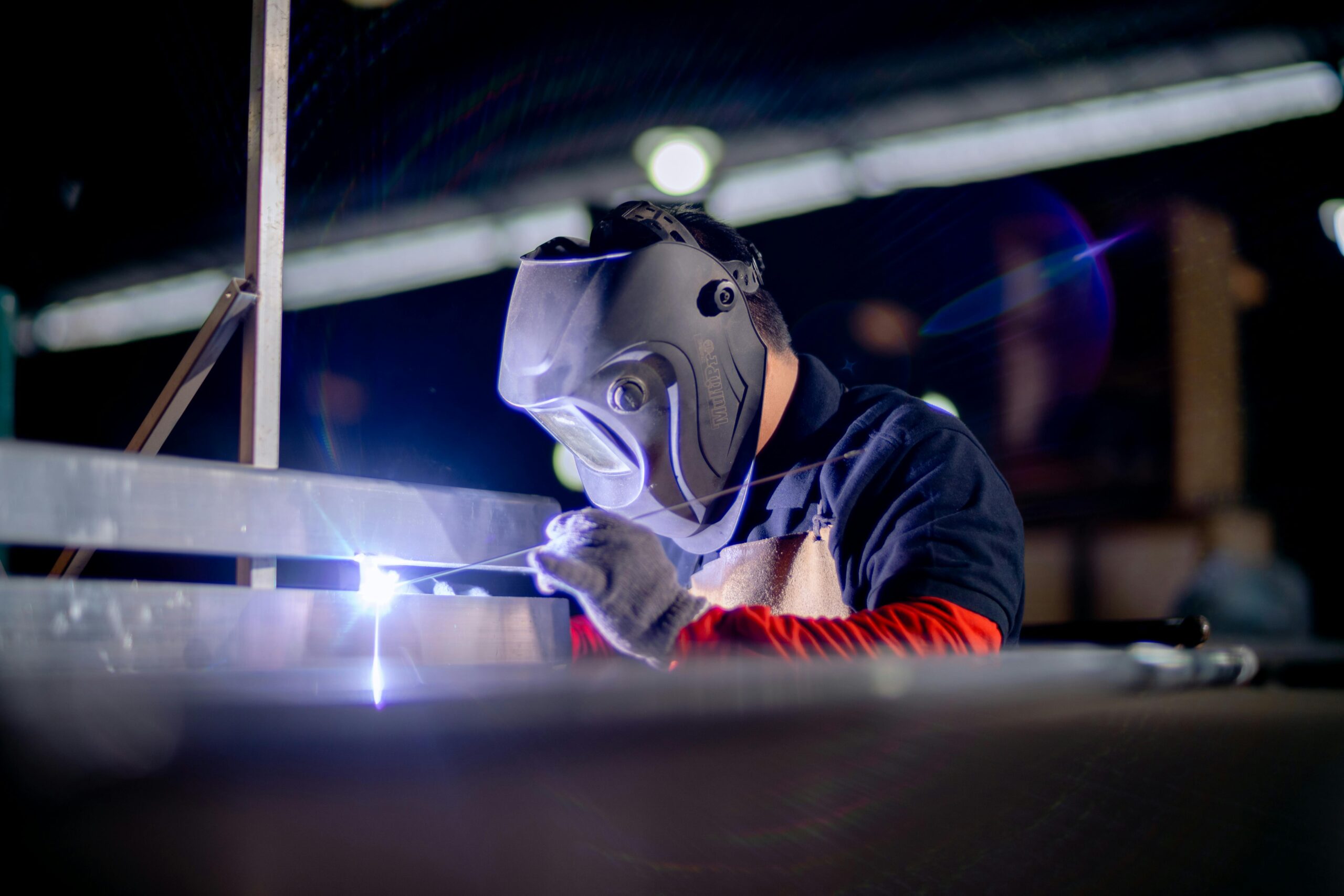
Every industrial pipe system, regardless of the service it carries, the material it is made from, or the code it was fabricated under, must be verified before it is placed in service. That verification most often comes in the form of a pressure test. Hydrostatic testing for industrial pipe systems is the final quality checkpoint that confirms the system holds pressure, that joints and connections are leak-free, and that the fabrication and installation work performed meets the requirements of the applicable code.
For owners, project engineers, and construction managers, understanding what hydrostatic testing involves, why the procedures are specified the way they are, and what the documentation requirements look like is practical knowledge that affects how projects are planned, scheduled, and closed out.
What Hydrostatic Testing Is and Why It Is Required
A hydrostatic test fills the pipe system with water, pressurizes it to a specified test pressure above the system’s design pressure, and holds that pressure for a defined time period while the system is inspected for leaks, distortion, or pressure loss. Water is used as the test medium because it is incompressible. If a failure occurs during the test, the water releases without the explosive energy release that would accompany a failure under pneumatic (gas) pressure.
Hydrostatic testing for industrial pipe systems is required by virtually every piping code applicable to industrial construction. ASME B31.3 Process Piping, ASME B31.1 Power Piping, ASME B31.9 Building Services Piping, and other applicable codes each specify hydrostatic test pressure requirements as a function of the system’s design pressure and the material’s allowable stress at test temperature. The typical requirement under ASME B31.3 is a test pressure of 1.5 times the design pressure, adjusted for temperature if the test is conducted at a temperature different from the design temperature.
These requirements are not conservative suggestions. They reflect the safety factor necessary to verify that the installed system will perform reliably under operating conditions, including transient pressure excursions that may momentarily exceed normal operating pressure.
Test Preparation: What Has to Happen Before the Water Goes In
Hydrostatic testing is a closeout activity, but preparation for it begins long before the test date. Several preconditions must be met before a system is ready to test.
System completion. All welds in the test boundary must be complete, inspected, and accepted. Any required NDE, including radiographic or ultrasonic testing of welds, must be completed and documentation reviewed. Supports and hangers must be installed, because a pressurized line without proper support can move in ways that damage joints or adjacent equipment.
Temporary isolation. Equipment that cannot withstand the test pressure, including instrumentation, certain valves, inline meters, and rotating equipment, must be isolated from the test boundary. This requires temporary blinds, blank flanges, or spool pieces that substitute for the excluded items during the test. The configuration of the test boundary must be documented so the system can be restored to its operating configuration after the test is complete.
Vent and drain preparation. The system must be filled with water from the low points while venting air from the high points. Trapped air in a hydrostatic test creates compressibility in the test medium, which masks pressure loss and creates a potential energy hazard if a fitting fails. All high points must have vents to allow complete air purging before the test pressure is applied.
Test pressure calculation and documentation. The test pressure must be calculated for the specific system being tested, accounting for the design pressure, the material, the design temperature, and the test temperature. This calculation must be documented and reviewed before the test begins.
Our post on Documentation and Traceability in Pharmaceutical Pipe Fabrication covers the documentation principles that underpin quality verification in regulated piping systems, which apply directly to hydrostatic test preparation and recordkeeping.
The Test Procedure: Pressurization, Hold, and Inspection
Once the system is filled, vented, and verified to be at the correct temperature, pressurization can begin. The test pressure is typically applied in incremental steps, allowing inspection at intermediate pressures before reaching the full test pressure. This staged approach allows small leaks or distress to be identified before the full test pressure magnifies the problem.
The rate of pressurization must be controlled. Rapid pressurization creates pressure transients and water hammer effects that can damage fittings and connections that would hold up fine under a controlled ramp. Most codes and engineering specifications require pressurization at a controlled rate with inspection stops at specified increments, commonly at 50 percent and again at the full test pressure.
Once the full test pressure is reached, the system is held at that pressure for the inspection period specified in the applicable code. ASME B31.3 requires a minimum hold time of 10 minutes, though many project specifications require longer hold periods, particularly for larger or more complex systems. During the hold period, all accessible joints, connections, and fittings are visually inspected for leaks. Any seepage, sweating, or pressure drop during the hold period is a test failure that requires investigation, repair, and retest.
After the inspection is complete and the test is accepted, the system is depressurized in a controlled manner. The water is drained from the system, and any temporary isolation devices are removed so the system can be restored to its operating configuration.
Hydrostatic vs. Pneumatic Testing: When Each Is Appropriate
Most industrial piping is hydrostatic tested, but some systems cannot be water-tested for practical reasons. Systems with components that cannot tolerate water contamination, systems installed in environments where draining and drying the test water would be impractical, or systems where the weight of the test water would exceed structural capacity may require a pneumatic test using air or nitrogen instead.
Pneumatic testing is inherently more hazardous than hydrostatic testing because compressed gas stores significantly more energy than pressurized water. The potential for a catastrophic sudden release in the event of a failure is much higher under pneumatic conditions. This is why ASME B31.3 restricts pneumatic testing to situations where hydrostatic testing is not practical and requires that pneumatic tests be conducted with additional precautions, including a lower test pressure and mandatory personnel clearance zones during pressurization.
The decision between hydrostatic and pneumatic testing must be made during planning, documented in the test package, and approved by the responsible engineer before the test proceeds.
Our post on High and Ultra High Purity Piping Systems covers how high-purity piping in semiconductor and pharmaceutical applications has specific test requirements driven by contamination concerns, where pneumatic testing with clean dry nitrogen is often preferred over hydrostatic testing to protect internal surface quality.
Test Documentation and Turnover Package Requirements
The hydrostatic test produces documentation that becomes part of the project’s permanent quality record. A complete test package for a hydrostatic test typically includes the following.
Test package cover sheet identifying the system being tested, the test boundary, the applicable code, the design pressure, the calculated test pressure, and the test date.
System isometric or P&ID marked up to show the test boundary, the location of all temporary blinds and isolation points, and the location of all vents and drains used during the test.
Test pressure calculation showing how the required test pressure was derived from the design pressure, material allowable stress, and temperature correction factors.
Test log recording the pressurization increments, hold times, pressure gauge readings, and the name of the inspector conducting the test.
Leak test record documenting the result of the visual inspection at each pressure increment and at full test pressure, including the location and disposition of any leaks found.
Gauge calibration certificates confirming that the pressure gauges used during the test were calibrated within the required interval.
These documents are reviewed by the owner’s inspector or the authorized inspection agency before the test is formally accepted. On ASME-stamped systems, the authorized inspector must witness or review the test as a condition of the code stamp.
The Occupational Safety and Health Administration (OSHA) establishes requirements for pressure testing safety under its general industry and construction standards, including requirements for personnel protection during pressurized testing operations. More information on OSHA’s requirements applicable to pressure testing activities is available at osha.gov.
Special Considerations for High-Purity and Regulated Systems
For piping systems in pharmaceutical, semiconductor, and other regulated environments, hydrostatic testing for industrial pipe systems carries additional requirements beyond what the base piping code specifies.
Water quality for hydrostatic testing in high-purity systems must meet the facility’s specifications. Using uncontrolled tap water in a system designed for ultrapure water service can introduce chlorides, particulates, and biological contamination that is extremely difficult to remove after testing. High-purity piping systems are typically hydrotested using water that meets the facility’s purified water specification, or they are pneumatically tested with clean dry nitrogen to avoid contamination risk entirely.
Complete draining and drying after hydrostatic testing is required for systems where residual moisture would be detrimental, including stainless steel systems susceptible to chloride stress corrosion cracking in concentrated chloride solutions left by evaporating tap water, and systems that will carry gases or chemicals incompatible with water.
The American Society of Mechanical Engineers (ASME), through its B31 piping code series, establishes the baseline technical requirements for pressure testing across the range of industrial piping applications. More information on ASME’s piping codes and pressure testing requirements is available at asme.org.
Our post on Commissioning High Purity Piping Systems covers the commissioning and verification sequence for high-purity piping systems, where pressure testing is one step in a broader verification process that includes flushing, sampling, and purity verification before the system is released for production service.
How Hydrostatic Testing Fits Into the Project Schedule
Hydrostatic testing for industrial pipe systems is a closeout activity that sits near the end of the installation sequence, but planning for it must begin much earlier. Test packages must be prepared in advance of the test date, temporary blinds must be procured and staged, and inspection scheduling must be coordinated with the owner’s inspector and, on code-stamped systems, the authorized inspector.
On large projects where multiple systems are being tested in sequence, the test schedule must be coordinated with the overall construction schedule to ensure that installation is complete, NDE is accepted, and supports are in place for each system before its test date arrives. Test failures that require weld repairs and retest can add days to the schedule if not planned for, and the repair, retest, and re-inspection cycle must be accounted for in the project schedule.
Our post on What to Expect During a Steel Fabrication Project covers how quality verification milestones fit into the overall project timeline from fabrication through field installation, providing context for where hydrostatic testing falls in the broader project closeout sequence.