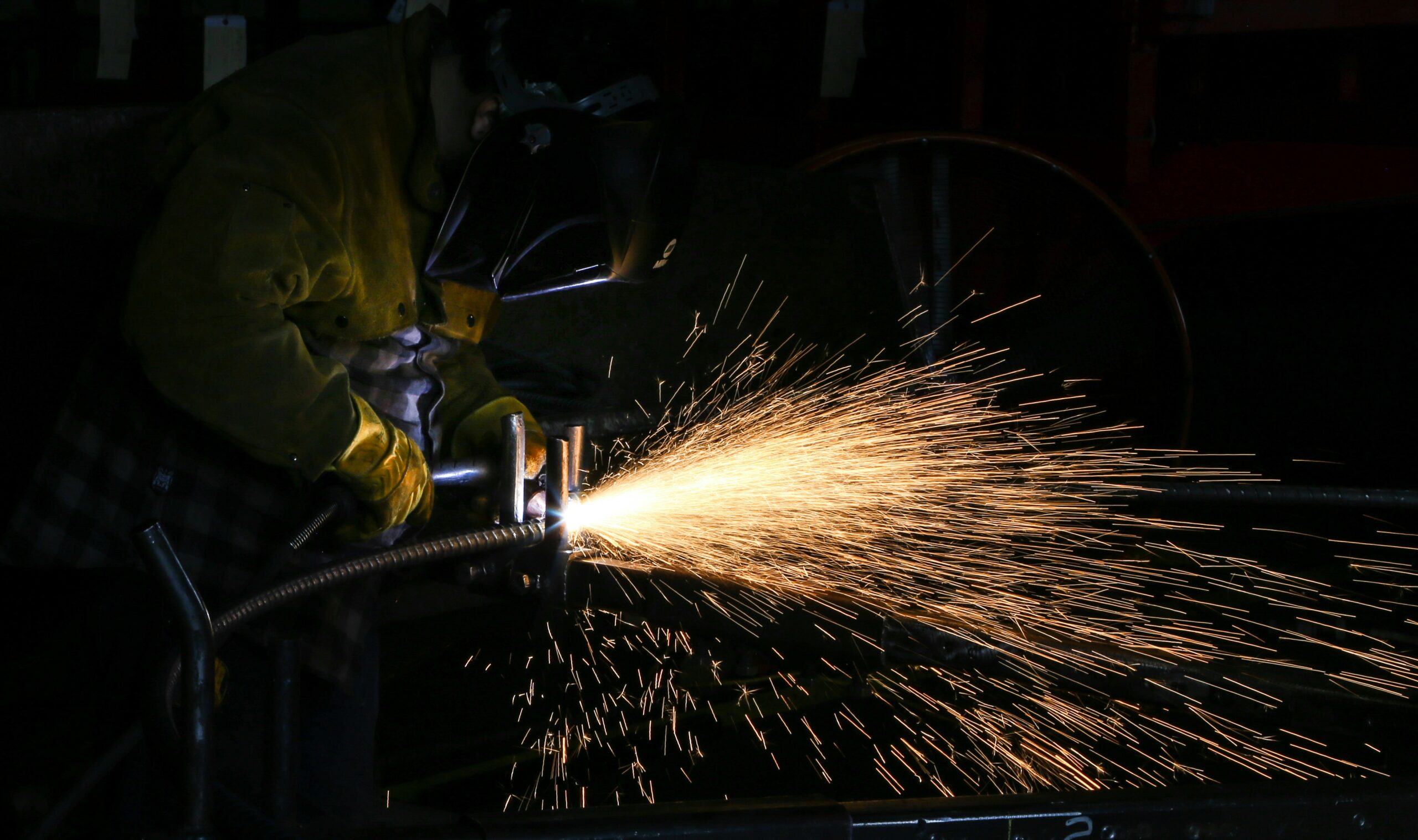
Industrial construction projects frequently involve piping systems that must perform reliably under demanding conditions. Power plants, petrochemical facilities, data centers, and process manufacturing sites depend on high-integrity piping to transport steam, chemicals, cooling water, and other critical fluids. When these systems are installed or repaired in the field, manual welding remains one of the most important techniques available to construction teams.
Manual Field Welding for Critical Projects combines the skill of highly trained welders with disciplined quality control procedures to produce durable connections in environments where automated systems cannot always operate effectively. While fabrication shops often use automated welding processes, field installations often demand a more adaptable approach that can handle complex geometries, limited access points, and variable site conditions.
This article explores why Manual Field Welding for Critical Projects continues to play a major role in industrial construction, how it supports critical infrastructure, and the safety and quality practices that govern its use.
Why Manual Field Welding for Critical Projects Is Still Essential
Modern fabrication facilities often rely on automated welding systems to improve productivity and consistency. However, many construction environments cannot accommodate automated systems. Equipment limitations, pipe orientation, weather exposure, and access constraints frequently require welding to be performed manually.
Manual welding offers several advantages in these environments:
- Flexibility for welding in tight or irregular spaces
- Adaptability to different pipe diameters and materials
- The ability to respond quickly to changing field conditions
- Precision adjustments by experienced welders
Because of these advantages, manual welding continues to play a critical role in pipeline construction and field installation where human expertise can adapt to conditions that machines cannot easily handle.
For companies executing complex construction projects, the ability to perform Manual Field Welding for Critical Projects allows installation teams to maintain schedules while preserving the quality required for critical systems.
Applications Where Manual Field Welding Is Critical
Manual field welding is used across many industrial sectors. These industries depend on high-quality welded joints that must withstand pressure, temperature, and mechanical stress.
Power Generation
Power plants require extensive piping networks to transport steam, cooling water, and process fluids. Many welds occur during installation or maintenance shutdowns, making field welding essential. Manual welding allows crews to complete connections in turbine halls, boiler structures, and tight pipe racks.
Petrochemical and Refining
Refineries and chemical plants operate under high pressure and high temperature conditions. Weld integrity is vital to prevent leaks or catastrophic failures. Manual field welding allows welders to join pipes in complex process units where automated systems may not fit.
Pharmaceutical and Semiconductor Facilities
High purity piping systems in pharmaceutical or semiconductor facilities require precise welds and strict documentation. Field welding supports installation and modification of process systems without disrupting existing infrastructure.
Infrastructure and Energy Projects
Large infrastructure projects such as gas transmission pipelines also rely heavily on manual welding techniques for field joints and repairs.
Historically, manual shielded metal arc welding (SMAW) was widely used in pipeline construction and continues to be used when environmental conditions or accessibility make automated processes impractical.
Materials Commonly Welded in Field Applications
Industrial projects often involve a wide range of piping materials, many of which require specialized welding procedures. Companies like Ansgar Industrial frequently work with materials designed for demanding service environments.
Common materials used in Manual Field Welding for Critical Projects include:
- Carbon steel piping systems
- Stainless steel for corrosion resistance
- Duplex stainless steel for strength and corrosion resistance
- Chrome alloys such as P11, P22, and P91 for high temperature service
- Nickel alloys such as Inconel or Hastelloy for extreme environments
Each material requires specific welding procedures, filler metals, and preheat requirements. Skilled welders must understand the metallurgical properties of each alloy to avoid cracking, distortion, or other defects.
The Importance of Skilled Welders
Manual field welding relies heavily on the expertise of the welder. Unlike automated systems, the welder must control travel speed, arc length, and heat input throughout the process.
Experienced welders bring several critical skills to field welding operations:
- Reading isometric drawings and welding symbols
- Maintaining proper welding technique across different positions
- Adjusting welding parameters based on conditions
- Identifying potential defects during welding
These capabilities are essential when performing welds in overhead positions, confined spaces, or difficult orientations.
For critical infrastructure projects, welders must often be qualified under strict industry codes such as the American Society of Mechanical Engineers (ASME) Section IX or other applicable welding standards.
Safety Requirements for Field Welding
Manual welding operations must follow strict safety procedures. Welding arcs produce intense heat, ultraviolet radiation, and sparks that can present serious hazards if proper controls are not in place.
The Occupational Safety and Health Administration (OSHA) establishes safety requirements for welding operations in the United States. These regulations cover protective equipment, electrical grounding, ventilation, and safe handling of welding equipment.
Examples of OSHA welding safety requirements include:
- Proper insulation and grounding of welding equipment
- Use of approved electrode holders and cables
- Adequate ventilation to remove welding fumes
- Protective clothing and face shields to prevent arc burns
Additionally, OSHA requires that welding cables be fully insulated and capable of safely carrying the electrical current used during welding operations.
These safety practices protect both welders and nearby workers while maintaining safe work environments on construction sites.
Quality Control in Manual Field Welding
Because many industrial piping systems operate under pressure, weld quality must be verified through rigorous inspection and testing.
Quality control for Manual Field Welding for Critical Projects typically involves multiple steps.
Welding Procedure Specifications
Before welding begins, engineers develop Welding Procedure Specifications (WPS) that define:
- Welding process
- Filler material
- Preheat and interpass temperature
- Heat input limits
- Travel speed and technique
These procedures help maintain consistency across all welds on the project.
Welder Qualification
Non-Destructive Examination
After welding is complete, inspectors verify weld integrity using non-destructive testing methods such as:
- Radiographic testing (X-ray)
- Ultrasonic testing
- Magnetic particle testing
- Dye penetrant inspection
These inspection methods detect internal flaws that could compromise system performance.
Challenges of Welding in the Field
Field welding environments present unique challenges that fabrication shops do not encounter.
Some common challenges include:
Environmental Conditions
Outdoor welding operations may be affected by wind, temperature changes, or moisture. These conditions can influence arc stability and weld quality.
Limited Accessibility
Many piping systems are located in congested pipe racks or structural frameworks. Welders must often work in tight spaces or elevated locations.
Time Constraints
Material Sensitivity
Some alloys used in high temperature or corrosive environments require careful heat control during welding to avoid metallurgical damage.
These challenges highlight the importance of experienced welding teams capable of performing Manual Field Welding for Critical Projects under demanding conditions.
How Experienced Contractors Deliver Reliable Field Welding
Industrial contractors that specialize in critical piping systems rely on structured processes to deliver reliable field welding results.
Key practices include:
Detailed Project Planning
Planning begins with reviewing isometric drawings, weld maps, and project specifications to identify welding requirements.
Skilled Workforce
Certified welders with experience across multiple materials and welding processes provide the technical capability required for complex projects.
Integrated Quality Systems
Quality programs track weld documentation, inspection records, and material traceability throughout the project.
Coordination with Fabrication
Field welding teams often coordinate closely with fabrication shops to align pipe spool delivery with installation schedules.
These practices allow construction teams to complete complex installations while maintaining compliance with industry codes and project requirements.
The Continued Role of Manual Field Welding
Even as automation advances within fabrication facilities, Manual Field Welding for Critical Projects will remain essential for industrial construction.
Field conditions often require a level of adaptability and craftsmanship that automated systems cannot replicate. Experienced welders provide the judgment and technical skill required to maintain weld quality under challenging conditions.
For companies supporting energy, manufacturing, and process industries, maintaining strong field welding capabilities remains a critical part of delivering reliable infrastructure.
Organizations like Ansgar Industrial support complex industrial projects by combining skilled welding personnel with disciplined quality control systems. This combination allows them to execute Manual Field Welding for Critical Projects that meet demanding safety standards and long-term performance expectations.