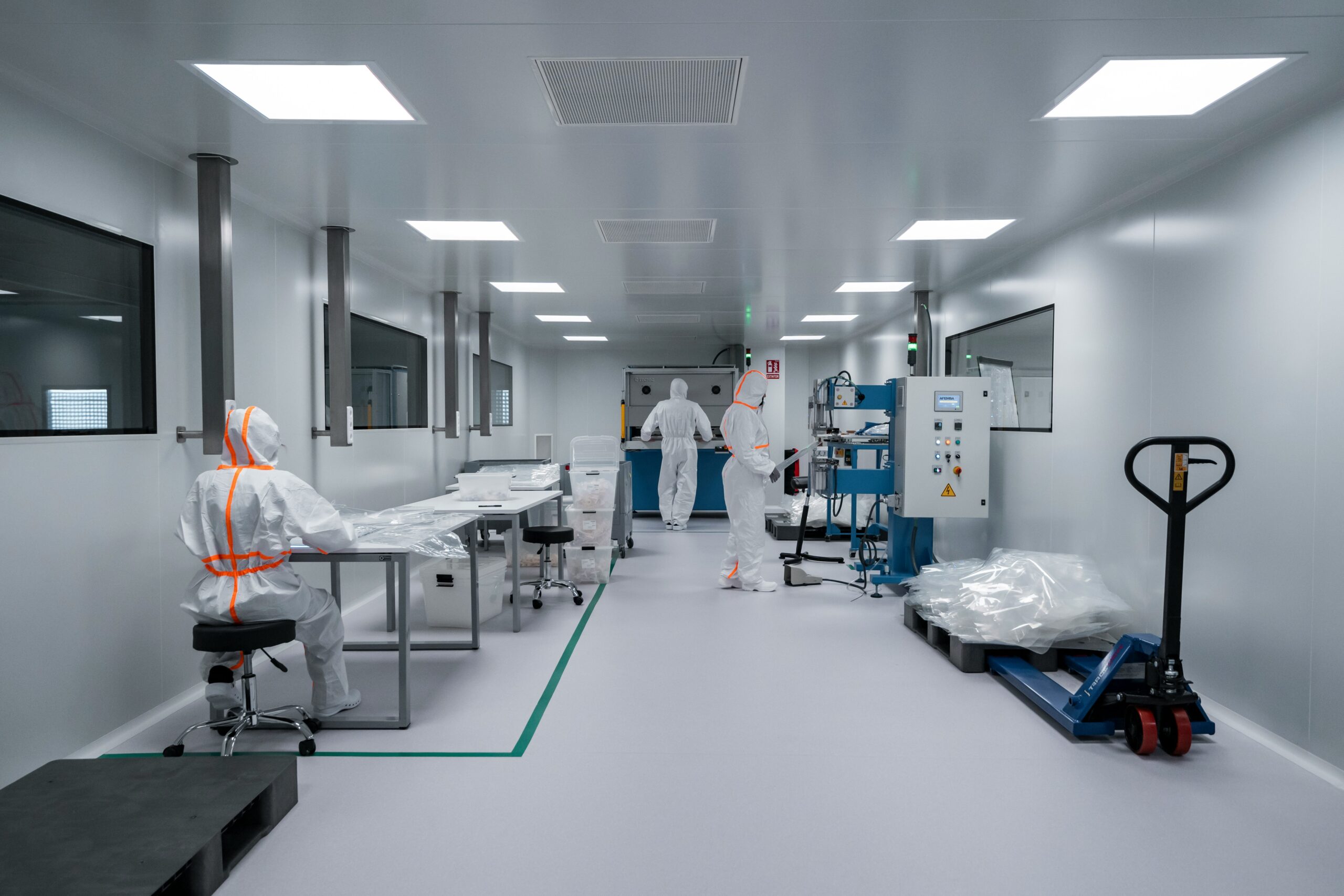
Clean rooms are the heartbeat of industries where even microscopic contaminants can destroy batches, disrupt yield, or compromise product safety. Whether supporting semiconductor manufacturing, pharmaceutical production, advanced research, or biotech facilities, every mechanical system inside a clean room must meet strict cleanliness and performance requirements. Among these systems, process piping and mechanical distribution networks play one of the most important roles in keeping the environment controlled, stable, and compliant.
For contractors and facility owners building or upgrading clean rooms, Pipe Fabrication for Clean Rooms brings a unique set of challenges that extend far beyond traditional industrial pipe fabrication. Every step of the process fabrication, material handling, welding, testing, and installation must directly support the clean room classification and the sensitive processes operating within it.
This guide explains how Pipe Fabrication for Clean Rooms works, why it is more demanding than standard industrial fabrication, and what facility owners should expect from a specialized fabrication partner.
Why Clean Room Piping Requires a Different Approach
Clean rooms follow strict standards that define particulate limits, airflow rates, and contamination controls. The United States Environmental Protection Agency notes that airborne particles as small as 0.1 microns can influence product quality in advanced manufacturing environments. For semiconductor and pharmaceutical facilities, this level of sensitivity requires absolute control over what enters the clean space.
Traditional industrial piping systems transport process fluids, gases, and utilities. In a clean room environment, however, these systems also influence particle generation, temperature, humidity, and chemical purity. For this reason, Pipe Fabrication for Clean Rooms requires:
- Specialized materials
- Highly controlled fabrication environments
- Advanced welding processes
- Rigorous documentation and testing
- Clean installation sequencing
- Strict contamination prevention
Every joint, bend, weld, and support must help maintain the cleanliness level defined by ISO 14644 and related standards. Clean rooms do not tolerate leaks, weld defects, oil residue, or surface imperfections that could shed particles over time.
Material Selection for Clean Room Piping Systems
The materials used for Pipe Fabrication for Clean Rooms are chosen to limit contamination, withstand rigorous sanitization, and maintain structural integrity under continuous operation.
Common clean room piping materials include:
1. Stainless Steel (304L, 316L)
Used for high purity water, chemical distribution, and gas systems. Stainless steel offers corrosion resistance and smooth interior surfaces when properly finished.
2. High Purity PVC, CPVC, or PVDF
Used for acid waste, drain systems, and corrosive applications. These plastics resist chemical attack while supporting clean room wash-down practices.
3. Electropolished Stainless Steel Tubing
Essential in semiconductor, pharmaceutical, and biotech environments. Electropolishing removes micro imperfections and creates a smooth internal surface that reduces contamination risk.
4. High Purity Gas Tubing (Nickel Alloys or Stainless)
Used for UHP gas delivery systems supporting semiconductor equipment where flow stability and zero contamination are required.
Material quality matters, but the way materials are handled is equally important. Cutting oils, fingerprints, dust, and improper storage can compromise clean room integrity before fabrication even begins.
Fabrication Controls that Protect Clean Room Performance
Leading fabrication shops use strict procedural controls to support clean room standards. These controls apply to every step in the process.
Controlled Fabrication Areas
Welding and assembly occur in segregated spaces designed to limit airborne contaminants. Work areas are cleaned regularly and have specific entry and handling protocols.
Tool and Equipment Cleanliness
All tools must be wiped down, disinfected, and kept in protective storage. Cross contamination between standard industrial projects and clean room projects is not allowed.
Material Handling and Storage
Pipe ends are capped. Surfaces are wrapped or bagged. Materials are stored on dedicated clean pallets that never touch dirty floors.
According to the National Institute of Standards and Technology, contamination control in advanced fabrication environments relies heavily on consistent procedural discipline rather than one time cleaning. This principle applies directly to the piping fabrication process.
Welding Requirements for Clean Room Piping Systems
Piping that serves clean room applications is almost always welded under tightly controlled procedures. Weld defects or contamination inside the pipe can introduce particles that migrate into the controlled environment or into the process itself.
Key Welding Practices Include:
1. Orbital Welding
Used for precision stainless steel work. Orbital welding produces consistent, repeatable welds with minimal oxidation and significantly lower contamination risk.
2. High Purity GTAW (TIG Welding)
3. Back Purging
Critical for maintaining smooth internal surfaces during welding. Oxygen exposure inside the pipe can lead to discoloration, pitting, or contamination.
4. Weld Inspection and Documentation
Photos, weld maps, QA checklists, purge logs, and test results all support traceability. Clean rooms require documentation that proves compliance, not assumptions.
High purity welds often require 100 percent visual inspection and testing before the spool leaves the fabrication facility.
Testing, Cleaning, and Packaging for Clean Room Readiness
Before a piping spool is shipped and installed, it undergoes strict testing and cleaning that prepare it for a controlled environment.
Hydrostatic or Pneumatic Testing
Depending on the system design. These tests verify pressure integrity and confirm that no defects can compromise clean room performance.
Internal Cleaning and Flushing
High purity systems may require multi step rinsing, detergent cleaning, and particle count verification.
Drying and Protective Capping
Once cleaned, piping must remain closed and protected to avoid airborne contamination.
Clean Packaging for Transport
Pipes are wrapped with cleanroom grade materials and shipped in sealed containers or crates.
Documentation from the fabrication shop follows each spool all the way to installation. This documentation supports regulatory compliance and provides proof of quality.
Installation Sequencing Inside the Clean Room
Pipe Fabrication for Clean Rooms does not end at the shop. Installation inside the facility is just as critical.
Clean rooms typically require:
- Strict gowning protocols
- HEPA filtered work zones
- Clean tools
- No grinding or cutting inside the space
- Low particulate field welding practices
- Sequencing that prevents cross contamination
Mechanical contractors must coordinate closely with clean room specialists, facility owners, and construction managers. Work areas must be cleaned frequently, and every step must protect the finished piping surfaces.
The Value of Choosing a Specialist for Clean Room Piping
Clean room projects are unforgiving. A single defect can disrupt production or compromise regulatory compliance. Choosing a fabrication partner with clean room experience prevents costly rework and protects long term facility performance.
Experienced partners offer:
- Clean room specific fabrication environments
- Advanced high purity welding capabilities
- Traceability systems
- Material handling expertise
- Detailed documentation
- Field crews trained in clean room behavior
- Strong coordination with commissioning teams
Industries like semiconductor production, pharmaceutical manufacturing, and biotech research trust partners who can match the precision required by their environments.